
Free UK delivery for orders over £50
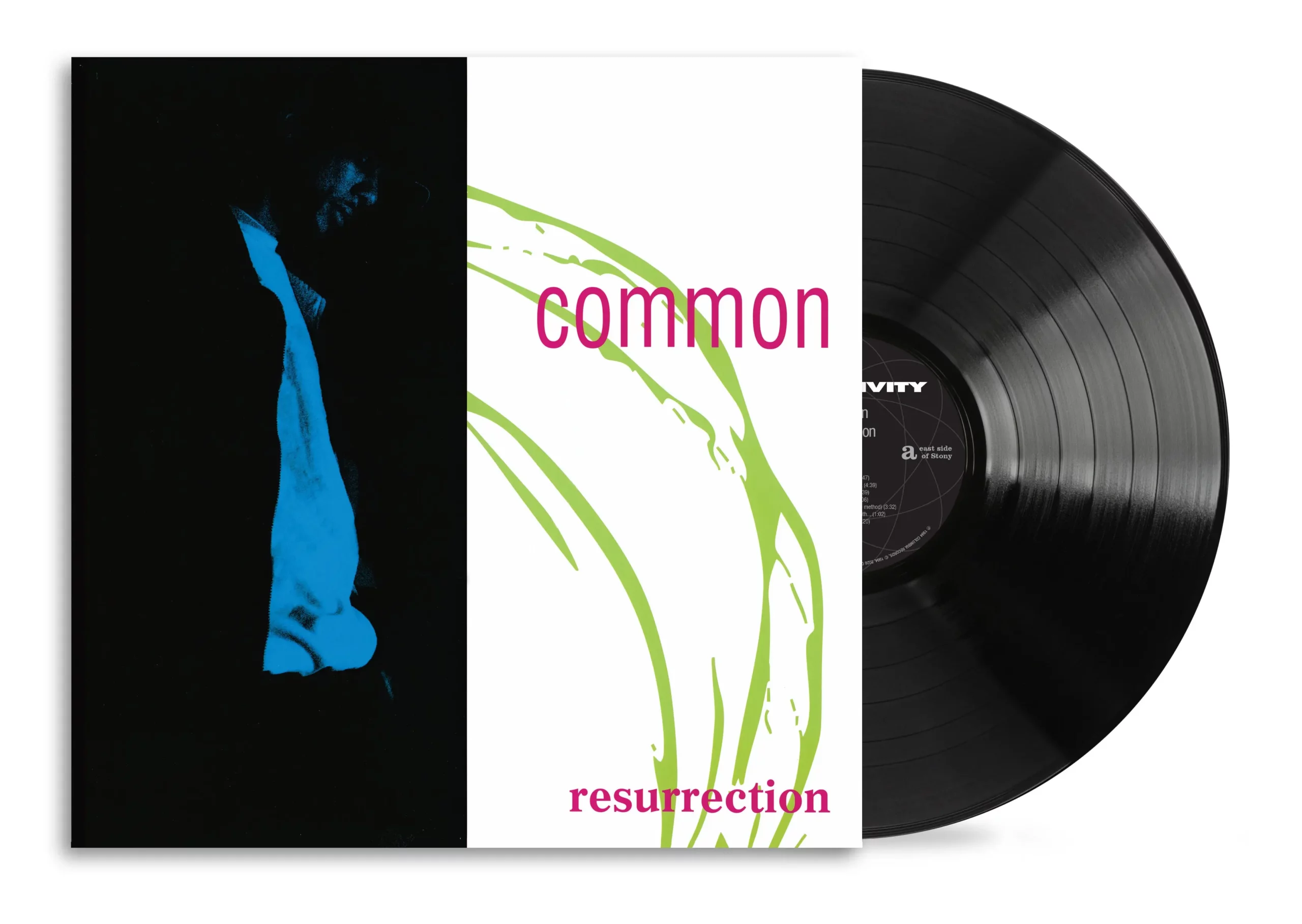
Resurrection
£28.00
Out of stock
Brand New
Before Common became a fixture of American hip-hop culture, Resurrection captured him as a young Chicago rapper sharpening an identity that did not need to imitate either coast. Released in 1994 under the name Common Sense, his second album feels local in the best possible way: observant, conversational, technically agile and rooted in the South Side streets that shaped him. Even its internal structure points home, with the record divided into “East Side of Stony” and “West Side of Stony”, references to Stony Island Avenue, where he was raised.
Most of the production came from No I.D., with additional work from Twilite Tone, and the beats suit Common’s writing because they leave room for language. Jazz-inflected samples, crisp drums and warm loops give him a flexible surface over which to change cadence, crack jokes or turn suddenly reflective. The title track is a fine example of that balance, buoyant enough to move easily but built around a rapper clearly interested in craft. Recording took place at Battery Studios in Chicago, and there is a strong sense of rapper and producer developing a shared grammar rather than chasing whatever was commercially dominant elsewhere.
The best-known song, “I Used to Love H.E.R.”, is constructed as an extended personification of hip-hop as a woman whose character changes as the culture changes. Its fame can overshadow the rest of the album, but it is useful as a key to Common’s wider approach: affectionate, argumentative, self-aware and willing to make an idea carry an entire song. Resurrection also closes with “Pop’s Rap”, the first of the recurring album-ending appearances by Common’s father, Lonnie “Pops” Lynn Sr., bringing family voice into a record already deeply concerned with place and identity.
Resurrection received substantial critical praise but comparatively little mainstream attention at the time. That mismatch now feels central to its charm. Nothing here sounds designed to announce importance. The pleasures are in the details: a rhyme that lands half a beat later than expected, the swing of a No I.D. loop, the wit hidden inside a serious thought. It is an album that rewards listening to the rapper as closely as the record itself listens to Chicago.
A1 Resurrection
A2 I Used To Love H.E.R.
A3 Watermelon
A4 Book Of Life
A5 In My Own World (Check The Method)
A6 Another Wasted Nite With...
A7 Nuthin' To Do
B1 Communism
B2 WMOE
B3 Thisisme
B4 Orange Pineapple Juice
B5 Chapter 13 (Rich Man Vs. Poor Man)
B6 Maintaining
B7 Sum Shit I Wrote
B8 Pop's Rap
Receive this record and others like it when you join our monthly subscription box. We handpick records based on your tastes and our eclectic knowledge.
You May Also Like
Related products
-
 Bunnyby Willie J Healey£8.00
-
 Port Isaac's Fisherman's Friendsby Port Isaac's Fisherman's Friends£8.00
-
 Field of Vines / He Moves Throughby Vacant Gardens£10.00
Related products
-
Bunnyby Willie J Healey£8.00
-
Port Isaac's Fisherman's Friendsby Port Isaac's Fisherman's Friends£8.00
-
Field of Vines / He Moves Throughby Vacant Gardens£10.00
-
 Kinky Fly / Sweet Loving Loveby Bunny Scott£13.00