
Free UK delivery for orders over £50
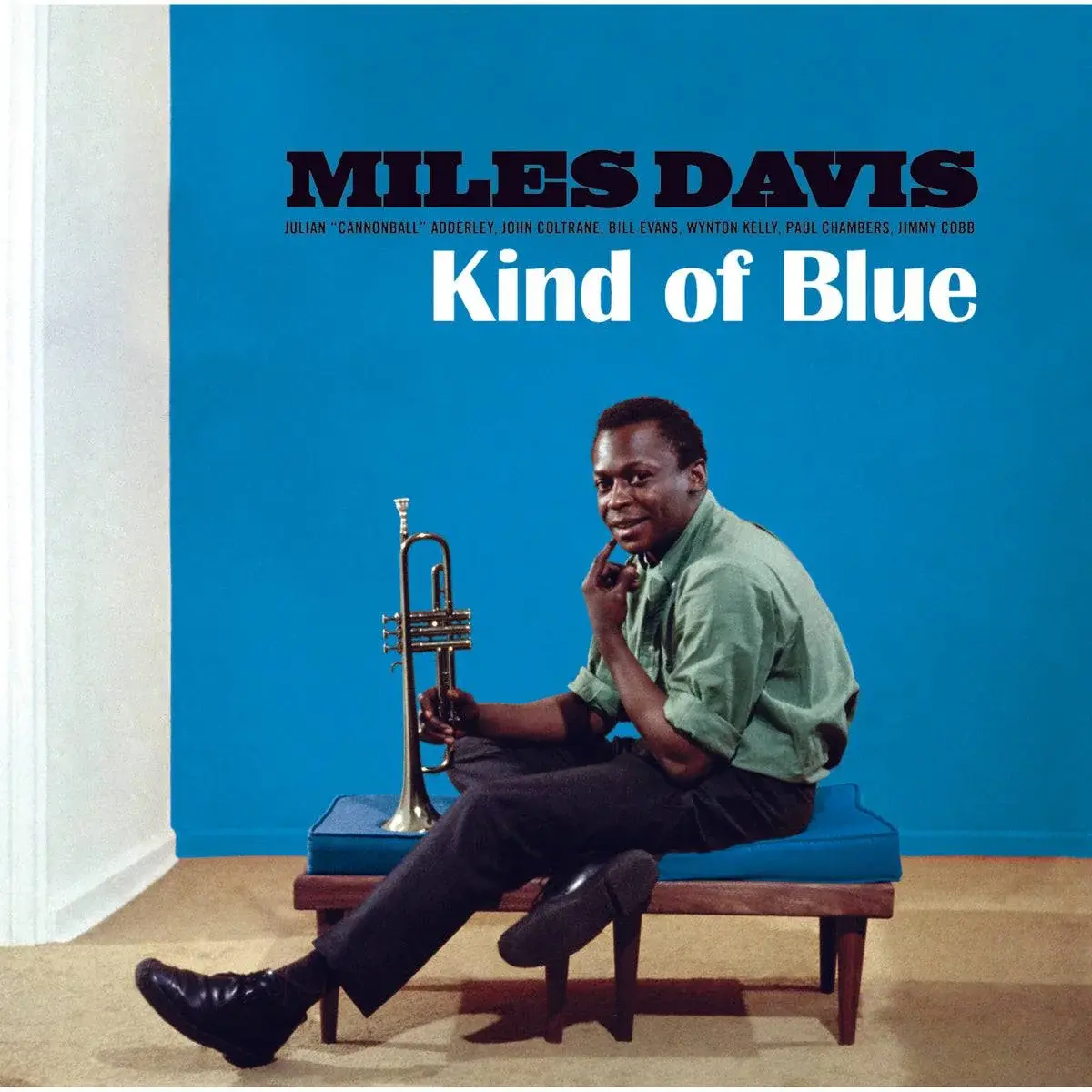
Kind Of Blue (Limited Edition)
£26.00
Only 1 left in stock
Brand New
Space is the first instrument on Kind of Blue. Miles Davis creates it, then trusts his musicians to know what to do with it. Miles Davis’s 1959 album is built around modal frameworks rather than the busier chord sequences associated with bebop and hard bop, giving the soloists scales and broad harmonic areas instead of a dense map of changes. The effect is not simplicity so much as freedom: melodies can breathe, pauses matter, and a tiny shift of emphasis can change the entire mood.
The sessions took place at Columbia’s 30th Street Studio in New York on 2 March and 22 April 1959, with Irving Townsend producing. Davis’s sextet was extraordinary: John Coltrane on tenor saxophone, Cannonball Adderley on alto, Paul Chambers on bass, Jimmy Cobb on drums and, for most of the album, Bill Evans on piano. Wynton Kelly replaces Evans on “Freddie Freeloader”.
Davis brought modal sketches rather than conventional complete scores, leaving the players substantial room to shape the performances through improvisation.
That approach gives each piece a distinct climate. “So What” is cool and spacious, its famous bass figure creating an open frame for the horns. “Freddie Freeloader” has a bluesier swing. “Blue in Green” contracts the mood into something hushed and circular, while “All Blues” moves with an easy six-beat pulse before “Flamenco Sketches” closes the album in an almost suspended state. What is remarkable is how unhurried the players sound despite the concentration required. Nobody seems anxious to fill the available space.
Kind of Blue became one of the most celebrated and commercially successful jazz albums ever recorded, but its reputation can make it seem more intimidating than the music itself. In practice, it is one of the most welcoming places to enter jazz because its sophistication is carried by feel rather than display. Listen to the tone of Davis’s trumpet, the way Evans places a chord or the different ways Coltrane and Adderley approach the same harmonic freedom. The album keeps revealing itself because it leaves enough room for the listener to enter too.
A1 So What
A2 Freddie Freeloader
A3 Blue In Green
B1 All Blues
B2 Flamenco Sketches
Receive this record and others like it when you join our monthly subscription box. We handpick records based on your tastes and our eclectic knowledge.
You May Also Like
Related products
-
 Bunnyby Willie J Healey£8.00
-
 Port Isaac's Fisherman's Friendsby Port Isaac's Fisherman's Friends£8.00
-
 Field of Vines / He Moves Throughby Vacant Gardens£10.00
Related products
-
Bunnyby Willie J Healey£8.00
-
Port Isaac's Fisherman's Friendsby Port Isaac's Fisherman's Friends£8.00
-
Field of Vines / He Moves Throughby Vacant Gardens£10.00
-
 Kinky Fly / Sweet Loving Loveby Bunny Scott£13.00