
Free UK delivery for orders over £50
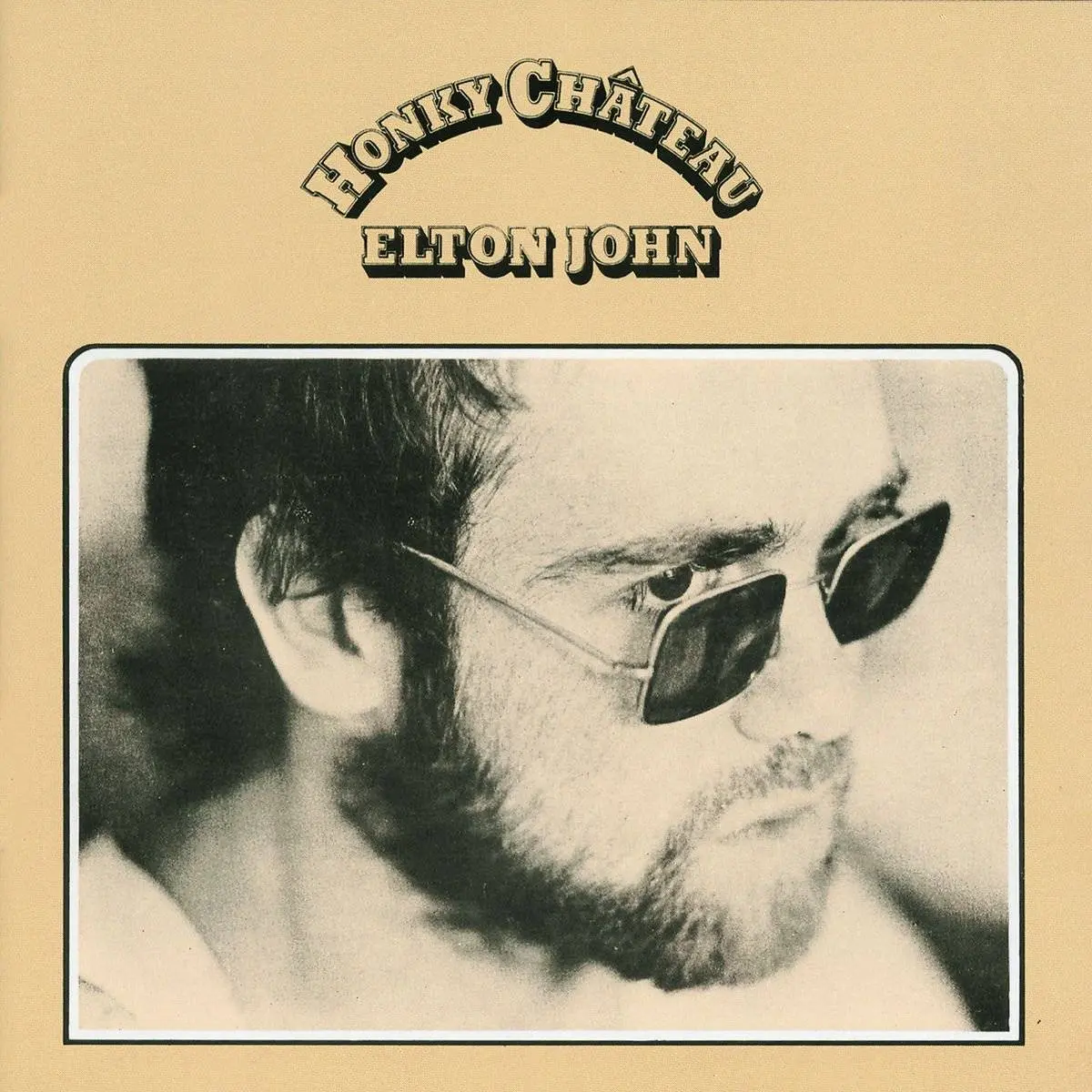
Honky Château
£30.00
Out of stock
Brand New
There is a relaxed confidence to Honky Château that suits the place in which it was made. Elton John and his musicians decamped to the Château d’Hérouville in France for the January 1972 sessions, working away from the London studio routine that had shaped his earlier records. The title is a joke on the château itself, but the setting coincided with a record that feels notably self-assured: piano-led songs with room for groove, country colour, gospel warmth and rock-band immediacy rather than orchestration doing all the emotional lifting.
Gus Dudgeon again produced, and the sessions were completed in little more than a week before the album was mixed at Trident Studios in London. That speed is audible as energy rather than haste. “Honky Cat” opens with a loose, New Orleans-flavoured strut, its piano and horns making the song feel almost conversational. “Rocket Man”, by contrast, turns Bernie Taupin’s science-fiction image into something quietly domestic and lonely. John’s melody keeps expanding while the performance remains controlled, a useful reminder that his most dramatic songs do not always need to sound theatrical.
Across the album, the partnership between John and Taupin is interested in characters as much as confessions. “Hercules” has a swaggering comic edge, while the quieter material shows how effectively John’s voice can sit inside a compact band arrangement. The playing gives the songs personality without crowding them: bass and drums move with a supple ease, guitar details flicker around the piano, and Dudgeon’s production allows the performances to breathe. It is an album whose richness often comes from arrangement rather than sheer scale.
Honky Château became the first of seven consecutive Elton John albums to reach number one in the United States, a remarkable run that says something about how rapidly his audience was expanding. Yet the record does not sound as though it is straining for mass appeal. Its strength is almost the opposite. John sounds comfortable enough to let a song be funny, melancholy, eccentric or understated as required. For a first-time listener, the pleasure lies in hearing a major songwriter and performer discover just how many different moods his core musical language could hold.
A1 Honky Cat
A2 Mellow
A3 I Think I'm Going To Kill Myself
A4 Susie (Dramas)
A5 Rocket Man (I Think It's Going To Be A Long, Long Time)
B1 Salvation
B2 Slave
B3 Amy
B4 Mona Lisas And Mad Hatters
B5 Hercules
Receive this record and others like it when you join our monthly subscription box. We handpick records based on your tastes and our eclectic knowledge.
You May Also Like
Related products
-
 Bunnyby Willie J Healey£8.00
-
 Port Isaac's Fisherman's Friendsby Port Isaac's Fisherman's Friends£8.00
-
 Field of Vines / He Moves Throughby Vacant Gardens£10.00
Related products
-
Bunnyby Willie J Healey£8.00
-
Port Isaac's Fisherman's Friendsby Port Isaac's Fisherman's Friends£8.00
-
Field of Vines / He Moves Throughby Vacant Gardens£10.00
-
 Kinky Fly / Sweet Loving Loveby Bunny Scott£13.00